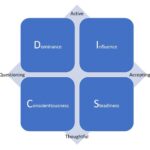
A while back, I was mentoring a client in the remodeling trade who couldn’t get customers to open up about their real budget no matter how he asked, which sent me down a research path into a set of intelligence-community techniques called elicitation. That research is what put John Nolan’s book, Confidential: Business Secrets – Getting Theirs, Keeping Yours, in my hands. Solving the elicitation problem turned out to be only part of what I discovered reading his book. Tucked into another chapter was another great lesson I hadn’t gone looking for: how to build a personality and psychological profile of your competitor’s owner.
According to Nolan, most small business owners who conduct competitive analysis are seeing only half the picture. They look at their competitors’ prices, websites, Google reviews, and social media posts. They compare features and study market position. That’s useful information, but after having read his book, I’ve come to see it as incomplete: it treats the competition like a machine rather than what it actually is, a human being making decisions.
That’s not something most business advisors ever talk about. His argument is pretty straightforward. If you understand how your competitor thinks and what drives their decisions, you can anticipate their next move before they make it.
His advice is not about being devious. It’s about being smart. And honestly, it’s more accessible than it sounds.
Why Personality Predicts Business Behavior
Every business owner leaves fingerprints everywhere. The way they price, the way they respond to competition, how fast they move, how they treat their staff and customers, what they post online, how they handle a difficult situation, all of it reflects who they are. Pattern recognition is the whole game.
Think about the competitors you know. Some are aggressive; they cut prices the moment they feel threatened. Others are methodical and slow to respond. Some are reputation-driven and highly sensitive to negative reviews. Others are transaction-focused and don’t seem to care what people say. Some are innovators who constantly push new offerings to market. Others are followers who copy whatever works.
Each of those tendencies reflects a personality type. And once you know the type, you can predict the behavior.
Intelligence professionals have used personality profiling for decades to anticipate the decisions of foreign leaders, adversarial agencies, and even business partners. The tools they use aren’t complicated. You can apply most of them to a local competitor without any special training.
Four Dimensions Worth Profiling
You don’t need a psychology degree to do this. You need four things: observation, time, a notebook, and a framework for organizing what you see.
Here are the dimensions that matter most to size up your small-business competitors.
1. Risk Tolerance
This is the single most predictive dimension. A high-risk competitor moves fast, launches things before they’re ready, experiments with pricing, and is willing to take on debt or investment to grow. A low-risk competitor holds ground, copies proven models, and rarely makes a first move.
How do you read this? Look at their history. How often do they introduce something new? Do they follow trends early or late? Did they have an SBA loan or invest their own savings? Do they expand quickly or consolidate what they have? The answers will tell you whether you’re competing against someone who attacks or someone who defends.
Knowing this changes your strategy. A high-risk rival is betting that speed compounds faster than their mistakes catch up with them, and sometimes that bet pays off for a very long time; Tesla is the clearest evidence of that. The posture that works against a high-risk rival isn’t waiting for them to fail. It’s staying positioned to capture the moments they do stumble, because rapid iteration produces real openings even when the overall bet is winning. Against a low-risk rival, the calculation flips. Aggressive innovation can leave them standing still while you move the market, since their entire strategy assumes nobody moves faster than they’re willing to validate.
The split shows up clearly in the self-driving car industry right now: same technology bet, opposite postures:
Elon Musk: Tesla has aggressively pushed Full Self-Driving and its robotaxi rollout, expanding into new cities with limited safety drivers, betting on rapid iteration and scale to outrun competitors and regulators. Musk’s public stance has consistently been to ship, gather real-world data, and fix problems as they surface. It’s drawn NHTSA scrutiny and safety investigations along the way, but Tesla keeps expanding city by city.
Tekedra Mawakana and Dmitri Dolgov: Waymo has taken the opposite path in the same market. Years of geofenced testing in limited areas like Phoenix and San Francisco before any wider rollout; heavy reliance on lidar plus camera sensor stacks (more expensive, more redundant); and slow, methodical expansion, market by market, with extensive safety validation before opening to the public. Waymo has been profitable in trust and safety data, but far slower to scale nationally.
Same industry, same underlying technology bet, opposite risk postures. Tesla’s bet is that speed and iteration win the market before the technology fully matures. Waymo’s bet is that one high-profile accident by a rushed competitor could set the whole industry back in terms of regulation, so being the trusted, proven option wins long-term market share. Both strategies are visible in the news cycle right now: regulatory actions against Tesla’s rollout pace, Waymo’s continued city-by-city expansion announcements.
2. Ego and Reputation Sensitivity
Some owners are ego-driven. Their business is their identity, and how they look to the community matters more than almost anything. These competitors are highly predictable. They’re constantly chasing visibility, ribbon cuttings, local news mentions, award nominations, any chance to get their name and face in front of the community, because being seen matters as much as the underlying numbers. They respond emotionally to negative reviews. They feel compelled to match or beat any public claim you make. They’ll drop price to win a contract even when it doesn’t make economic sense, because losing feels like losing in public.
Others are ego-neutral. They’re transactional operators who measure everything in margin and volume. They don’t care if you win an award. They don’t care what the review says. They care about the P&L.
The ego-driven competitor is easier to manipulate and easier to neutralize. If your marketing consistently out-positions them publicly, they’ll spend energy responding to you that should be going toward their actual business. The ego-neutral competitor requires a different approach: you can’t out-signal them, so you have to out-execute them.
Put these two leaders in the hospitality and branded properties industry side by side, and the pattern’s obvious:
Donald Trump: In the Trump Organization, the brand is the man’s name, literally stamped on every property. When the Trump Organization loses a contract, like when NYC terminated its Ferry Point golf course deal after January 6, the response is a lawsuit, not a quiet settlement. When workplace complaints or health code issues surface at properties like Bedminster, coverage of the dispute becomes part of the story rather than being handled internally. The business, the name, and the public persona are one and the same, so every operational problem becomes a reputational fight, waged in public and often in court.
Anthony Capuano: Anthony is the CEO of Marriott International, and I bet you never heard of him, which is the point. Marriott runs on a franchise-heavy, standards-driven operating model built around core values, guest satisfaction scores, and associate engagement metrics tracked across thousands of properties worldwide. When a property underperforms, or a review score drops, the response is a standards audit and operational fix, not a public statement from leadership. Nobody outside the industry could name Marriott’s CEO from memory, and that’s by design. The brand is bigger than any one person’s identity.
Trump’s identity and the business are fused, so every problem becomes a public, personal fight. Capuano’s isn’t, so problems get routed through a standards process instead of a headline. That’s the difference ego-driven and ego-neutral competitors create when things go wrong.
3. Decision Speed and Style
Some owners decide fast and trust their gut. Others are deliberate and data-driven. Some delegate. Others control everything.
Decision speed tells you a lot about reaction time. A fast-deciding competitor will respond to your moves quickly; a new offer you launch on Monday might have a matching promotion from them by Thursday. A slow-deciding competitor takes weeks to respond, giving you a window to establish a foothold before they catch up.
Decision style reveals where their vulnerabilities lie. The gut-decision maker is susceptible to emotional triggers and impulse moves. The data-driven owner is slow but harder to fool; they won’t chase a trend until they’ve seen the numbers. The micromanager has a capacity ceiling. The delegator has a consistency problem.
Watch how they handle staff turnover, customer complaints, and market changes. That behavior under pressure reveals their default decision style more clearly than anything they’d say about themselves.
Here’s what that looks like at two very different clock speeds:
Sardar Biglari: As the CEO of Steak ‘n Shake, he said, “As the sole capital allocator, I employ neither analysts nor advisors.” No committee, no market study, no franchisee consensus. Sardar has slashed the menu from eight pages to a bi-fold, moved quickly to rebrand the chain around beef tallow fries and Bitcoin promotions, and has openly dismissed the idea that you can’t cut your way to a turnaround. A board member once resigned and put in a regulatory filing that Biglari never sought input before or after major decisions. That’s the gut-decision pattern in its purest form: decisive, fast, unaccountable to anyone else’s data.
Truett and Dan Cathy: Truett built Chick-fil-A from a single diner into a fast-food empire. His son Dan now runs the business. Same industry, opposite clock speed. Truett built, and Dan Cathy continued, an expansion model in which new locations open only when matched with a vetted operator, a process that can take a year and involve dozens of interviews per candidate. Low debt, strict franchisee criteria, deliberate market-by-market rollout instead of chasing unit count. The payoff shows up in the numbers: roughly 96% franchisee retention over nearly 50 years. Nobody at Chick-fil-A is making Bitcoin-burger-style moves on a whim. Every expansion decision runs through the same vetting machine regardless of who’s asking.
Biglari moves alone and fast, answerable to no one. Chick-fil-A moves slow and by committee, vetting every decision the same way no matter who’s asking. One clock speed creates volatility. The other creates consistency.
4. Financial Position and Pressure
A competitor under financial pressure behaves differently than a stable one. Pressure makes people irrational. They cut prices when they should hold them. They take bad contracts. They advertise more aggressively even when the margins don’t support it. They make promises they can’t keep.
You can read financial pressure without seeing anyone’s balance sheet. High staff turnover is often a financial signal: they’re either cutting wages or creating a chaotic environment. Sudden heavy discounting can be a signal. A flurry of “special offers” with unusual urgency. Changes in their physical space or equipment that suggest either investment or neglect. How busy they look, or perform, versus what they say publicly.
A financially pressured competitor is often worth leaving alone. They tend to self-destruct if you’re patient. A well-capitalized competitor requires a more deliberate long-game response.
Two founders, same market, opposite endings:
Adam Neumann: As the CEO of WeWork, he locked the company into a mountain of long-term lease obligations while collecting month-to-month payments from members, a mismatch that meant WeWork owed landlords decades of rent whether or not the desks were full. He kept expanding anyway, adding hundreds of locations worldwide while burning cash at a rate few companies have ever survived. He made promises that outran what the business could deliver, selling WeWork to investors as a tech platform worth 47 billion dollars when, underneath the language, it was a real estate arbitrage bet. And there were the personal touches that showed up whenever the pressure built: senior executives flown somewhere on short notice only to be left waiting or abandoned at the airport, and buildings Neumann personally owned leased back to his own company on his own terms. When the IPO paperwork finally forced the numbers into daylight, the valuation cratered from 47 billion to under 10 billion within months, and Neumann was pushed out.
Mark Dixon: The founder and executive chairman of IWG, formerly known as Regus, provides flexible workplaces like WeWork. Mark spent three decades building the same kind of company, flexible office space, on the opposite temperament. He survived the dot-com crash, almost losing everything, and came out the other side, like someone who never forgot what that felt like. While Neumann was signing leases the revenue couldn’t support to inflate headline growth, Dixon was quietly buying more than 30 competitors over the past decade, funded by actual cash flow rather than investor hype. He’s been open about running a disciplined, unglamorous operation focused on return on investment and real profit, not valuation stories. IWG is now the largest flexible workspace operator in the world, with over 5,000 locations, dwarfing what WeWork ever had at its peak. Forbes once called him the anti-WeWork, and it’s hard to put it better. Dixon never made a headline-grabbing promise because he never needed to. He just kept compounding.
Neumann financed growth with promises the business couldn’t back up, and it caught up with him fast. Dixon financed growth with cash flow, one acquisition at a time, and it compounded for decades. Same market, opposite relationship to pressure.
How to Build the Profile
You’re not building a surveillance dossier. You’re building a mental model; a working theory of how this person makes decisions that you update over time as you observe more.
There are two moves here, and the order matters. Start with a fast AI-driven baseline to get oriented in minutes. Then build the ongoing file that keeps that baseline honest as new behavior shows up over time.
Start With a Fast Baseline
One of my sons was working for a company that had recently been acquired, and I wanted a quick read on what the business might look like on the other side of that deal before there was any real signal beyond the announcement itself. I opened a fresh AI conversation, deliberately with no prior context, and asked it to build a first-pass profile of the acquiring company’s leadership across the four dimensions using only what’s publicly available. It gave me a working theory in minutes instead of weeks, enough to start forming real expectations about what might change. It wasn’t the final word. It was the baseline against which everything after that was tested.
Here’s the prompt, written so you can copy it straight into Claude or ChatGPT:
Research [Name], [title] at [Company]. I want a competitor psychology profile built across four dimensions: risk tolerance, ego and reputation sensitivity, decision speed and style, and financial position and pressure. Use only publicly available information: news coverage, company communications, interviews, social media activity, court filings, SEC filings if the company is public, employee reviews on Glassdoor or Indeed, and customer reviews. For each of the four dimensions, tell me what the public record actually shows, cite where each observation came from and roughly when it happened, and clearly flag anything that’s an inference rather than a documented fact. Do not speculate about their personal life, mental health, or anything outside how they run the business. End with a short summary of what this profile suggests about how they’re likely to react under competitive pressure.
Treat what comes back as a hypothesis, not a verdict. It’s the first draft of the mental model, the one you spend the following weeks confirming or correcting with what you actually observe.
If your AI tool doesn’t have live web access, you can get most of the way there yourself before handing it off: pull their entire Google review history, not just the last five. Run their domain through the Wayback Machine and see every version of their website going back years, which shows you how often they actually change things and what they change under pressure. Read their full Indeed and Glassdoor review history. Scroll their full social media posting history. Compile it all into a series of files, then upload them to AI and ask it to work from the same prompt above.
The baseline from the burst analysis is a hypothesis. This is how you keep testing it: watching for what changes, catching new signals the baseline couldn’t have seen yet, and feeding that new data back to AI so the profile keeps evolving instead of going stale the day you built it.
Keep watching what’s public and observable, this time for change rather than a first look. Has their website updated since your baseline pass? What’s shifted in their Google reviews, and more importantly, has anything changed in how they respond to the negative ones? Watch their social media over time, not just what they post, but whether the volume changes, whether the topics they engage on shift, whether their tone under criticism holds steady or cracks. Notice if they start or stop showing up at local events. And one I lean on constantly with clients: keep checking what former employees say as they’re leaving the door. You already pulled their historical Indeed reviews in the burst step. Now you’re watching for new ones and whether the pattern holds or shifts. A fresh wave of complaints about turnover, chaos, or unpaid overtime tells you something changed since your baseline, and that’s exactly the kind of signal worth feeding back into the profile.
One more layer I add for both the business and the person leading it, and it’s built specifically for this ongoing job: automated web alerts. This is how I do it. I use Talkwalker Alerts, a free tool that works like Google Alerts but crawls a wider index: news, blogs, forums, and social mentions, without needing a Google account. I set up separate alerts and then every new mention lands in your inbox with a link and a snippet, exactly the kind of new data point that belongs in your notes file.
Then layer in what you can learn through conversation. Former customers of theirs who are now yours will tell you things without realizing how much they’re telling you. Suppliers you share will occasionally drop useful signals. Vendors who work both sides of a market see patterns across competitors. None of this requires asking direct questions, which takes you back to Nolan’s elicitation principles.
Finally, look for the moments of stress. When a competitor faces a difficult situation, a bad review, a price war, a new entrant in the market, or a supply problem, watch how they respond. That response is the clearest window into their real personality you’ll get, and it’s exactly the kind of thing the baseline couldn’t have predicted before it happened.
Keep the running notes file in something simple: a Google Doc, a Notion page, even a plain text file works. Every time you check in on a competitor, add a dated entry: what changed on their website, what the newest Google reviews said, whether they posted a new special this week, anything a new Indeed or Glassdoor review or alert surfaced. Don’t try to analyze it in the moment. Just capture it and move on.
The baseline gives you a strong personality and pattern read immediately. The ongoing file is what tells you whether that read still holds, and specifically how they’ll react to something you do next Tuesday. You need both: a fast baseline to get oriented, and an ongoing file that keeps testing and refining it. The file only earns its keep once you actually do something with it, which is the next step.
What to Do With the Profile
The first thing you do with a growing notes file is stop trying to read it yourself. Every month or so, feed the whole thing back into AI using the same four-dimension structure from your original baseline prompt, and ask it directly: what’s changed, and what patterns show up across these new entries that the baseline didn’t catch? AI is built for exactly this kind of work, finding the signal in a pile of loosely connected notes that would take you hours to reread and cross-reference on your own. It’ll catch things you’d miss, like a competitor’s discounting always spiking in the same week their Indeed or Glassdoor reviews mention short-staffing, or a pattern where every price increase follows within days of a bad news cycle for them locally. That’s not intuition anymore; that’s a documented cycle you can plan around.
If you want to take it a step further, you can automate the collection side too. If you’re using an AI platform with built-in scheduling, you can set up a recurring task that pulls new Google reviews, social posts, or Indeed/Glassdoor reviews on its own and drops them straight into your notes file, no extra tool required. If your platform doesn’t support that, a connector tool like Make.com or Zapier.com can do the same job on a schedule. Either way, the goal is the same: stop relying on remembering to check. But the automation isn’t the point, and neither is the AI tool itself. It’s the pattern recognition happening on your behalf, turning a stack of dated observations into an early warning system for how a specific competitor will likely behave.
The whole point is to stop being surprised and start being positioned.
If your competitor is high-risk and ego-driven, you know they’ll respond aggressively to any public challenge. Don’t trigger a price war you don’t want. Instead, compete on dimensions they don’t value: service depth, reliability, or community relationships. Let them chase the fight you’re not having.
If your competitor is low-risk and methodical, you have room to innovate. They won’t follow quickly, and when they do, you’ll be two steps ahead. Speed is your advantage.
If your competitor decides fast and trusts their gut, expect them to react to your moves within days, not weeks. Match their speed only where you have to, and spend the windows you do get locking in advantages they can’t unwind quickly. If your competitor is slow and data-driven, you have more runway than you think. They won’t move until the numbers convince them, so a new offer or a new position can run for weeks before they even start deliberating over it.
If your competitor is under financial pressure, watch for the window. A pressured owner makes mistakes at the worst possible time; usually when a major customer is watching. Be ready to offer a better alternative when that moment comes.
If your competitor is ego-driven and reputation-sensitive, your positioning doesn’t need to attack them directly. Simply be consistently excellent in public. Better reviews, better stories, or better visibility create a psychological pressure they’ll eventually respond to on your terms, not theirs.
Nolan quotes Frederick the Great: “It is pardonable to be defeated, but never to be surprised.” That’s the whole argument for this kind of work. You may not win every competition, but you should never be caught off guard by a competitor you could have understood better.
A Final Note on Small Markets
For small business owners competing locally, this matters even more than it does in large markets. You’re not competing against an anonymous corporation. You’re competing against a person you might run into at the Chamber of Commerce meeting, the farmers market, or the school pickup line.
That proximity is an advantage if you use it. People reveal themselves constantly in small markets. Every interaction is data. The question is whether you’re collecting it deliberately or letting it flow past you.
Start with one competitor. Build a simple profile. Update it as you observe more.
What would change about how you compete if you already knew what your rival was going to do next?