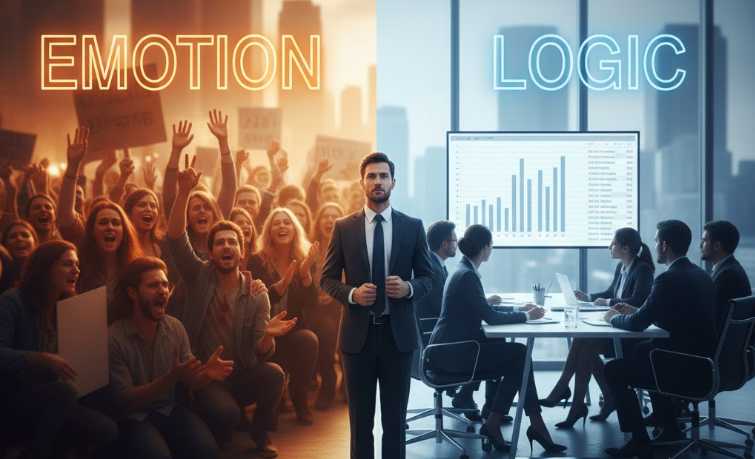
Now that 2025 is behind us, I always take the time in January to reflect on the previous year and ask what it taught me. I have learned that politics, in particular, has a way of surfacing the same human patterns that play out in business every day. It reminds me that emotion, not logic, is what moves people, and that’s a lesson entrepreneurs too often forget.
Because I grew up in New York City and still own residential property in Virginia, the results of the November 2025 elections caught my attention, not because they were shocking, but because they were so familiar. Once again, voters chose emotion over analysis, story over substance, and identity over data. But that’s not new. It’s been happening for generations, and it happens every day in sales conversations, negotiations, and branding decisions.
Ross Perot and the Boardroom Pitch That Lost the Nation
Perot’s argument made perfect sense. But politics, like business, isn’t won on logic. People don’t buy the best argument; they buy the story that makes them feel seen. He was asking voters to think when they wanted to feel.
It’s the same mistake many entrepreneurs make. They flood potential customers with features, stats, and ROI slides, forgetting that buyers, like voters, make decisions in their gut long before they justify them with logic.
The Emotional Operating System
Malcolm Gladwell described this perfectly in Blink. He called it thin-slicing, the brain’s ability to make split-second judgments using tiny fragments of information. Those judgments often feel intuitive but are actually built on years of stored patterns and emotional memory.
Gladwell cited studies showing that people instinctively trust taller, more confident, and more photogenic leaders. Franklin Roosevelt’s commanding height and calm voice gave reassurance during the Depression. Kennedy’s athletic presence made him seem dynamic and modern. Reagan’s Hollywood polish carried credibility before he spoke a word. Even Volodymyr Zelenskyy, the former actor who became Ukraine’s president, benefited from pre-existing familiarity; voters already felt like they knew him.
Voters don’t think through those impressions; they feel them. The same thing happens in business. A confident handshake, a warm tone, or a professional design all trigger trust faster than a PowerPoint presentation ever could.
Gladwell illustrated this bias further with the Pepsi Challenge. In blind taste tests, people could identify Pepsi’s sweeter flavor from Coke’s. But in a triangle test, when given three cups, two of one brand and one of the other, and asked which was different, they couldn’t tell. Loyalty wasn’t based on taste; it was based on story and identity. Once people had chosen a side, their brains filled in reasons to defend it.
That’s the emotional operating system at work. Whether choosing a president, a soda, or a contractor, we decide first and rationalize later.
The Memory Problem
Once emotion writes the first story, it’s hard to erase. Psychologists refer to this phenomenon as confirmation bias: the tendency to seek and interpret information that confirms our existing beliefs.
That’s why voters can’t be swayed once they decide they dislike someone. For many, Donald Trump is that figure. No matter what he does, their minds are already set. Facts can’t compete with their emotional memory.
The same thing happens in business. Think of the Bud Light controversy a few years ago. One marketing decision collided with cultural identity, and suddenly a beer brand became a symbol in a much larger argument. People didn’t respond to the product; they reacted to what it represented to them emotionally.
First impressions turn to stone quickly. The Pepsi Challenge proved that, and so does politics. Once emotion takes hold, it becomes the filter for everything that follows. That’s why entrepreneurs can’t afford to let first impressions happen by accident. The story people tell themselves about you will shape every future interaction.
The Trap of First-Order Thinking
Emotional reactions make sense in the moment, but they often collapse over time. Politics and business both reward what feels right in the short term rather than what works in the long term.
Consider the newly elected mayor of New York City, Zohran Mamdani, who campaigned on freezing rents. On the surface, it sounded compassionate, offering a direct solution to affordable housing in New York City. Once implemented, the system then kicks in: landlords who are unable to cover their expenses stop maintaining their properties, and they fall into ruin. Developers decided not to start any new construction project. The housing supply tightens, quality declines, and eventually rents begin to rise again, driven by the interplay of supply and demand.
The same logic applies elsewhere. “Cut taxes to boost growth” increases deficits and forces painful cuts later. “Place tariffs on imports to create jobs” raises domestic prices and hurts consumers.
These are classic examples of first-order thinking, reacting to the symptom rather than understanding the system.
Good entrepreneurs learn to think about the second- and third-order effects of their decisions. A short-term price discount, for instance, might lift revenue this month but train customers to wait for sales. Expanding too fast might boost headlines, but it erodes service quality and reputation.
Both Jim Camp and Gladwell warned against letting your intuition run unchecked. Gladwell demonstrated how our instincts often mislead us when we fail to pause and examine them. Camp, in his book Start with No, taught us that negotiators must begin with a clean board, wiping away assumptions, emotions, and premature conclusions before making a decision.
That discipline of pausing before reacting is rare in politics and invaluable in business. Slowing down doesn’t mean losing momentum; it means reclaiming control from impulse.
Teaching People to Think (When They’d Rather Feel)
Crowds instinctively choose comforting lies over uncomfortable truths. – Plato
If there’s one thing that left a strong impression on me last year, it’s that most people don’t like homework. They scroll headlines, skim captions, and let algorithms serve up outrage. They believe the story that feels true, even when it isn’t. Because, as Plato warned, crowds instinctively choose comforting lies over uncomfortable truths. Lies offer a sense of belonging, identity, and the safety of shared certainty. Truth isolates. It forces people to question themselves, to face what they’d rather ignore. That’s why groups so often defend illusions long after reality has contradicted them, punishing anyone who dares to challenge the comfort of consensus.
Politics thrives on that. The electorate rewards simplicity, not accuracy. Candidates learn quickly that emotional clarity beats intellectual honesty. It’s easier to sell a soothing story than a complicated truth. Crowds want validation, not complexity, and they’ll follow whoever can package reassurance in the language of certainty. The same pattern drives viral social media posts and political wins. People share what feels emotionally satisfying, not what’s most factual.
Business isn’t immune, but customers at least have skin in the game. They’ll check reviews, compare prices, and look for credibility signals. Still, many fall for the same emotional shortcuts, outrageous claims, inflated testimonials, or “miracle” results. Often, they continue to believe stale or outdated information simply because it’s familiar. It fits their worldview and spares them the discomfort of rethinking it. Just like voters, buyers want to feel right more than they want to be right, which is why emotional narratives still outsell evidence, even in a marketplace built on choice.
When companies exaggerate, they’re doing the same thing political campaigns do: selling emotion untethered from real evidence. It works for a while, but eventually the truth catches up.
Entrepreneurs have a better option. You can invite customers to think with you. Explain your reasoning. Be transparent about trade-offs. Pull them inside your decision-making process. When you do that, you’re not just selling a product, you’re modeling credibility.
People respect clarity. They may not always do their own research, but they can tell when you have.
Why 2025 Still Matters
Thinking about the 2025 elections, the real story for me wasn’t about left versus right. It was about how one group leaned harder on emotion while their opponents stayed stuck in logic. The candidates with more socialist-leaning messages used classic pathos; they spoke to frustration, hope, fear, and pride. Their competitors relied mostly on logos, solid arguments that made sense on paper but didn’t land in the gut. Voters reacted the way humans usually do. They followed the message that made them feel something.
And that isn’t new. It’s the same pattern you see across history. FDR, Kennedy, and Reagan all led with emotion, then backed it with reason. The 2025 race just replayed the same script. Different names, same wiring.
And it will happen again. The cycle repeats because the human brain hasn’t changed. We still crave reassurance more than data, belonging more than accuracy, and stories more than systems.
Entrepreneurs face the same challenge heading into 2026. Your customers don’t want a data dump; they want you to show them that you understand their pain. They don’t need perfection; they need trust.
If you can combine empathy with evidence, if you can lead with feeling but deliver with fact, you’ll stand out in any market. Because the one thing people remember, long after the promises fade, is whether they felt safe believing you.
Emotion Opens the Door. Truth Keeps It Open.
Politics and business run on the same human code. Emotion grabs attention; logic keeps it. One without the other doesn’t last.
Leaders who endure, whether in campaigns or companies, learn to strike a balance between the two. They project confidence like Roosevelt, inspire like Kennedy, reassure like Reagan, and deliver like Musk and Gates. They wipe the board clean before reacting, think past the first consequence, and remember that every story told today becomes tomorrow’s memory.
Emotion opens the door, but truth keeps it open.
How can you apply these lessons to your business this year?